When you become a parent, one of the first signs of your child’s development is often his or her ability to respond to sounds, and then to speak. You may already be on the lookout for your child’s first words. You say to yourself, “He hears well, he reacts when I speak, everything’s fine!” But have you ever thought about the importance of scheduling a preventive hearing evaluation for your child, even if you have no particular concerns?
It’s true that most of us only think about our child’s hearing when a problem becomes apparent. However, hearing plays an essential role in language development and, consequently, in your child’s ability to understand and express himself.
Hearing: A Key Component of Language Development
Hearing is not simply a matter of “hearing everything.” It’s about perceiving all sounds, from low to high frequencies. A preventive hearing evaluation for children can detect issues that may go unnoticed in everyday life.
Some children hear low-pitched sounds perfectly but struggle to hear high-pitched sounds. Your child may seem to hear well—reacting to familiar noises or lower voices—yet miss higher-pitched sounds critical to language learning. Many essential speech sounds, like “s,” “f,” and “ch,” fall within these higher frequencies.
The Challenges of Partially Impaired Hearing
Imagine this: your child seems to respond perfectly when you speak softly or when low-pitched sounds are present. You might think his hearing is fine. But if your child has partial hearing loss in high frequencies, he may struggle to hear consonants that are crucial for clear pronunciation and understanding.
This can lead to language delays, even if everything seems normal at first glance. A preventive hearing evaluation for children helps identify these subtle issues before they impact development.
Why Evaluate Your Child’s Hearing Even Without Apparent Symptoms?
1. Hearing Problems Can Be Silent
Some hearing problems, such as recurrent ear infections, are common in young children. They can temporarily reduce hearing without clear signs. A child may seem to hear well but still miss important sounds. A preventive hearing evaluation ensures nothing is overlooked.
2. Partial Hearing Loss Can Slow Language Development
Missing high-pitched sounds can affect your child’s ability to understand complete words or imitate sounds. This may lead to subtle but significant speech delays. Early hearing assessments can catch these issues before they interfere with language acquisition.
3. Hearing Influences School Success
Good hearing is essential for academic success. Children who cannot hear certain sounds clearly may struggle to follow instructions or participate in class, especially in noisy environments. A preventive hearing evaluation for children can help avoid future challenges.
4. Early Detection Means Simple, Effective Solutions
When hearing issues are detected early, solutions are often simple. For example, antibiotics for ear infections or other preventive treatments can resolve temporary hearing loss. A preventive hearing evaluation gives your child the best chance to grow and learn in ideal conditions.
When Should You Book a Hearing Evaluation?
You don’t need to wait for signs of hearing difficulties. Ideally, your child should have a preventive hearing evaluation during key stages of development—such as before starting daycare or school—or whenever language concerns arise.
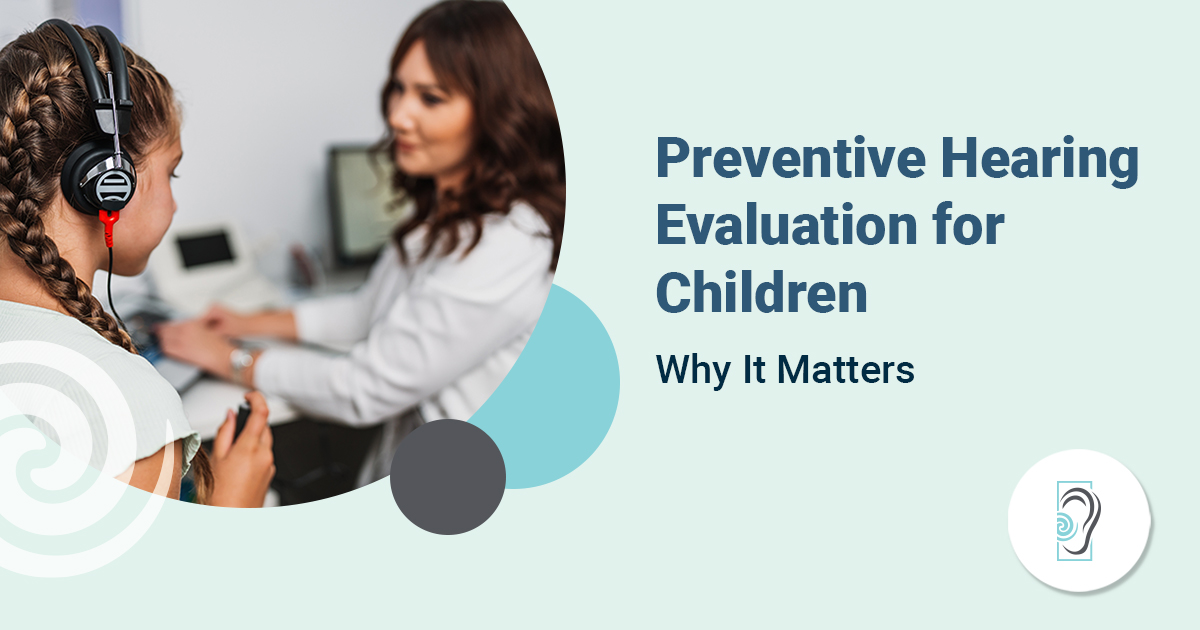
Audiologists perform age-appropriate hearing tests that assess your child’s ability to hear both low- and high-pitched sounds. If any issues are detected, they can usually be addressed quickly and effectively.
👉 Book your child’s preventive hearing evaluation today—no medical referral is necessary.
In Conclusion: Don’t Wait for Symptoms
Hearing is a cornerstone of your child’s language, social, and academic development. A preventive hearing evaluation for children can uncover hidden issues and ensure your child has the best possible start.
Don’t wait for doubts to arise. A simple, preventive hearing test can make all the difference.