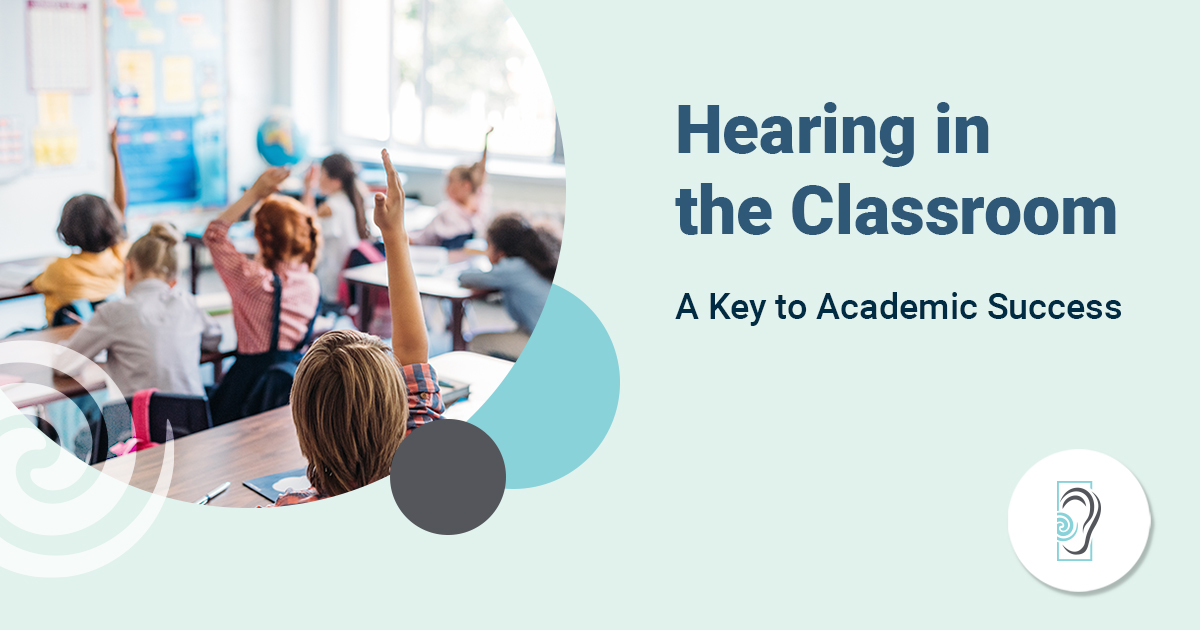
At school, children learn by listening. Whether it’s following instructions, participating in discussions, or developing language skills, hearing is essential. Yet, one often-overlooked factor can impact this ability: classroom noise.
How Noise Affects Learning
Studies show that excessive noise in the classroom can interfere with speech understanding, concentration, and memory. This impact is especially significant for:
- Young children whose listening skills are still developing;
- Children with even mild hearing loss;
- Students learning a new language;
- Children with learning or language difficulties.
In a noisy classroom, even children with normal hearing may struggle to understand clearly. This can lead to misunderstandings, decreased participation, and listening fatigue.
Why Consider a Hearing Evaluation?
Hearing issues in children can go unnoticed. A child who doesn’t hear well might not say so — and may appear inattentive, distracted, or academically behind.
An audiological evaluation is a simple and proactive way to ensure your child hears well in all situations. It’s especially important in a learning environment.
What Can Be Done to Reduce Classroom Noise?
Fortunately, there are several effective ways to improve the classroom sound environment, even without major renovations:
1. Classroom Setup
- Add rugs, thick curtains, or cushions to absorb sound;
- Place felt pads under chairs and desks to reduce scraping noises;
- Use bookshelves or movable panels as acoustic barriers;
- Consider acoustic wall or ceiling panels.
2. Promote Quiet Habits
- Teach classroom sound rules (e.g., speaking softly, raising hands);
- Include quiet time or mindfulness breaks during the day;
- Designate quiet zones for reading or individual work.
3. Use Listening Support Tools
- Classroom soundfield amplification systems (e.g., teacher-worn microphones);
- FM systems that send the teacher’s voice directly to a student’s hearing aids or headphones.
4. Reduce Background Noise
- Place noisy equipment (like printers or fans) away from students;
- Avoid seating sensitive students near windows or busy doors.
5. Collaborate with Professionals
- Teachers and school teams can work with audiologists, speech-language pathologists, or occupational therapists to:
- Identify students who may be struggling;
- Recommend personalized strategies or tools;
- Suggest practical changes adapted to the school environment.
A quieter classroom benefits everyone — better focus, easier communication, and less fatigue.
Set Your Child Up for a Strong School Year
As the school year begins, consider including a hearing check in your child’s health routine. Good hearing is essential for learning — and early support makes a difference.
Want to learn more about school hearing and audiology services?
Our team is available to answer your questions and help you explore the best options for your child.
Feel free to reach out to speak with an audiologist.